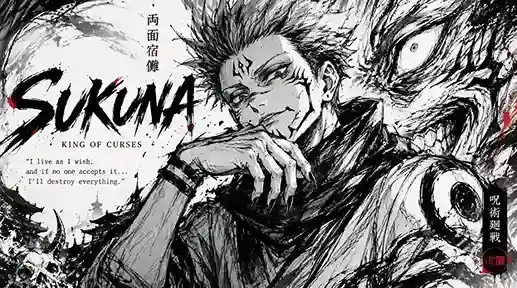
The Ultimate Guide to Ryomen Sukuna: True Form, Domain Expansion & Death Explained
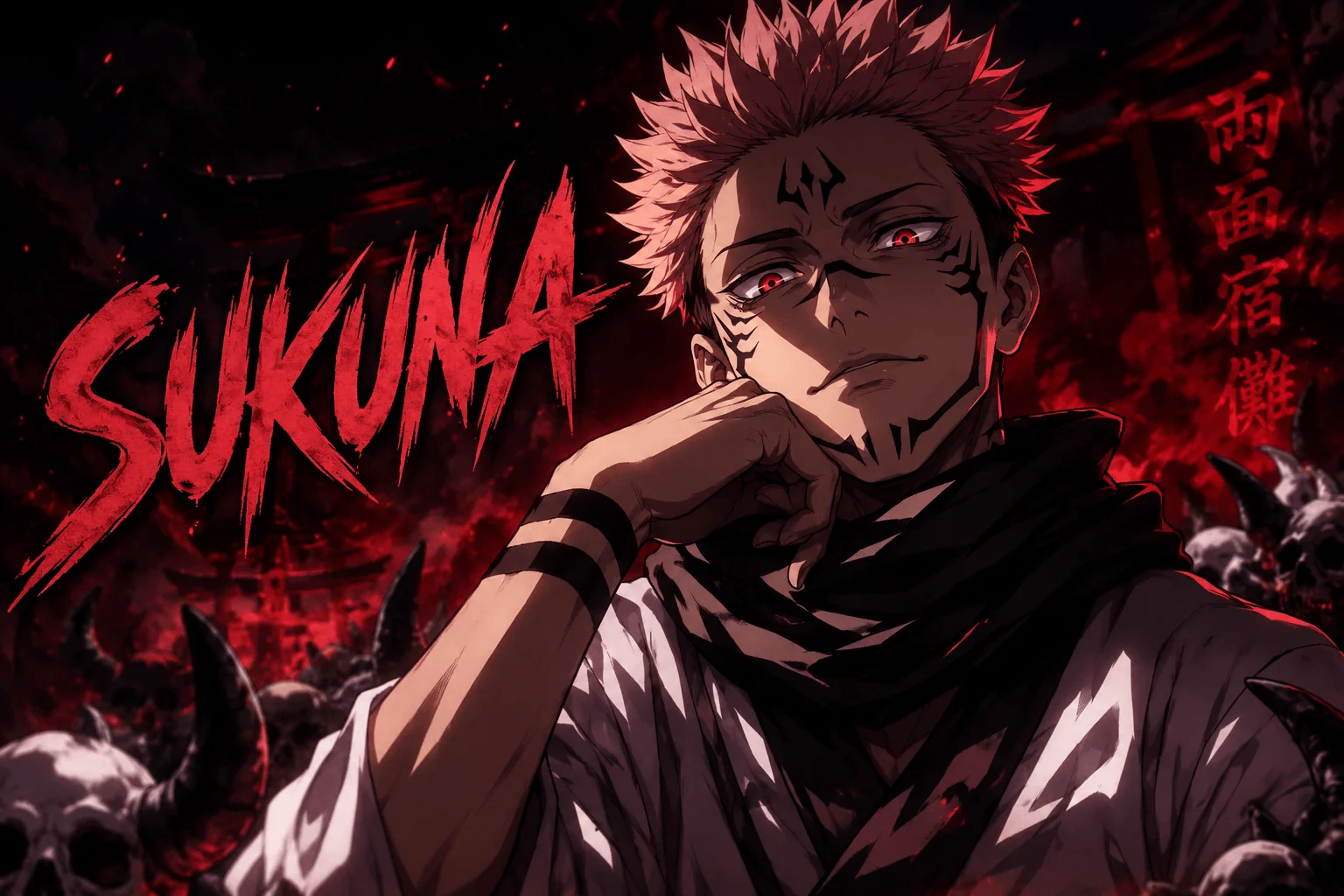
If you’ve been trying to follow the chaos of Jujutsu Kaisen, one name keeps demanding your attention — Ryomen Sukuna pfp. Whether you’re new to the series or a longtime fan still processing that Gojo fight, this guide covers everything: his origins, powers, forms, and how his story finally ends.
No fluff. No spoiler dodging. Just clear answers.
Who Is Ryomen Sukuna?
Ryomen Sukuna is the central villain of Jujutsu Kaisen — and arguably one of the most compelling antagonists in modern manga. Dubbed the King of Curses, he dominated the Heian era over a thousand years ago, a time when sorcerers were genuinely terrifying.
When he died, his body refused to go quietly. His cursed energy was so overwhelming that no sorcerer could destroy his remains. Instead, they sealed his power across twenty cursed fingers, scattering them as special-grade cursed objects. Centuries later, a kind-hearted teenager named Yuji Itadori swallowed one of those fingers — and the nightmare began again.
From that point forward, Sukuna’s presence drives nearly every major conflict in the series.
What Does Sukuna’s True Form Actually Look Like?
Most of the series shows Sukuna operating through a vessel — first Yuji, later Megumi Fushiguro. But his true form, the body he originally inhabited during the Heian era, is something else entirely.
Standing at 2.17 meters tall (roughly 7’1″), he’s built like something designed specifically for killing. Four arms. Two faces. Striking tattoos running across his skin. A second set of eyes that miss nothing.
It’s a form that screams power without needing to say a word.
Here’s how his two states compare:
Sukuna Form Comparison
| Feature | Incarnated Form (Yuji/Megumi) | True Form (Heian Era) |
| Height | Host’s height | 2.17 meters (7’1″) |
| Arms | Two | Four |
| Faces | One | Two |
| Cursed Energy | Limited by vessel | Unmatched, maximum output |
| Mobility | Restricted | Perfect combat agility |
The jump from vessel to true form isn’t just cosmetic. His cursed energy output in his original body operates without any of the limitations a host body imposes. It’s the difference between Sukuna fighting with one hand tied behind his back versus fighting at full capacity.
Malevolent Shrine: How Sukuna’s Domain Expansion Works
Most sorcerers who use domain expansion create an enclosed barrier — a pocket dimension where they hold every advantage. Sukuna does something different, and that difference is what makes Malevolent Shrine so uniquely terrifying.
There is no barrier.
Instead, Sukuna uses a binding vow to extend the domain’s reach across an open area. Everything within that range becomes subject to a guaranteed-hit mechanism — relentless, unavoidable slashing attacks that dismantle targets before they can meaningfully respond.
The hand sign itself — fingers interlocked with one pointing outward — resembles a gesture associated with Enma, a deity of death in Buddhist tradition. That’s not an accident. Malevolent Shrine doesn’t trap you inside a domain. It simply erases whatever it touches.
Gojo vs. Sukuna — What Actually Happened?
For years, the question wasn’t if Gojo Satoru and Sukuna would fight — it was when, and who would walk away.
The answer, delivered in the manga, shocked the entire fandom.
Their clash is every bit as catastrophic as expected. Gojo activates Infinite Void. Sukuna counters with Malevolent Shrine. The domain clash initially shows two forces operating at comparable heights, which tells you everything about how far Sukuna has come.
But the fight’s outcome turns on something subtler than raw strength. Sukuna uses Mahoraga — the divine shikigami from the Ten Shadows technique — to progressively adapt to Gojo’s Limitless ability. Once that adaptation is complete, Sukuna delivers a slash that doesn’t target Gojo directly.
It targets the world around him.
By cutting through space itself, he bypasses the invincibility that made Gojo seem untouchable. The strongest modern sorcerer is bisected in chapter 236. It’s one of the most brutal, most discussed moments in the entire manga.
Why Did Sukuna Take Over Megumi Fushiguro?
Sukuna’s move into Megumi’s body is calculated, not impulsive. He has a specific reason: the Ten Shadows Technique.
This ability allows the user to summon and control powerful shikigami, including Mahoraga — a divine entity so dangerous that no sorcerer had ever successfully tamed it. Sukuna saw what that technique was capable of, and he wanted it.
Yuji’s body gave Sukuna raw physical power and a durable vessel. Megumi’s body gives him tactical depth — the ability to summon weapons and creatures rather than relying purely on brute force.
The emotional weight of this possession hits hard for Yuji. He spent the entire series trying to protect Megumi, and Sukuna turns that relationship into a weapon against him.
The Sukuna Fingers — Why Do They Matter?
After Sukuna’s original death, his twenty fingers became some of the most dangerous objects in the jujutsu world. Each one is classified as a special-grade cursed object, packed with concentrated cursed energy.
Consuming a finger boosts the host’s power dramatically — but it also loosens the King of Curses from his seal, giving him more influence over the host’s body. The more fingers consumed, the more Sukuna can assert control.
Collecting all twenty fingers effectively restores Sukuna to his full, original power. This is why the fingers serve as the central MacGuffin of the series — and why so many factions are either trying to gather them or destroy them.
The Sukuna and Yuji Connection You Might Have Missed
Here’s where the story gets personal.
The manga eventually reveals that Yuji Itadori isn’t just a random teenager who happened to swallow a cursed finger. His father, Jin Itadori, is actually the reincarnation of Sukuna’s twin brother from the Heian era.
That makes Yuji a direct descendant of Sukuna’s bloodline.
It explains several things that previously seemed like plot conveniences — Yuji’s extraordinary physical ability, his unusual resistance to Sukuna’s total control, and the strange way Sukuna occasionally shows something almost resembling interest in his vessel. The final fight between Yuji and Sukuna isn’t just a battle between hero and villain. It carries a thousand years of family history underneath it.
What Is the Fuga Technique?
Outside of his iconic slashing attacks and Malevolent Shrine, Sukuna possesses another technique worth understanding: Fuga, commonly referred to as the fire arrow.
Introduced during the Shibuya Incident, Fuga condenses a massive amount of cursed energy into a single concentrated explosive strike. The result is capable of obliterating an entire city district in one shot.
It serves as Sukuna’s answer to durable targets that can shrug off conventional attacks. It’s also what he uses to finally destroy Mahoraga during the Shibuya arc, before the shikigami can fully adapt to his cursed energy style.
How Does Sukuna Die?
The final arc of the manga brings every surviving sorcerer into the fight against Sukuna — and the battle doesn’t end with one clean, dramatic blow.
Yuji, Megumi, Nobara, and Todo coordinate to systematically dismantle Sukuna’s cursed techniques, stripping away his advantages one by one. The King of Curses, who spent over a thousand years treating combat as entertainment, is forced to fight for his survival.
The finishing blow comes from Yuji. Using Piercing Blood combined with a direct strike, he lands the hit that ends it. Sukuna, characteristically, refuses to acknowledge anything resembling defeat or sentiment right up until the end — mocking the very concept of love and connection even as he disintegrates.
Then he’s ash.
It’s an ending that feels earned precisely because it doesn’t romanticize him. Sukuna dies exactly as he lived: contemptuous, unrepentant, and alone.
Why Sukuna Became a Cultural Phenomenon
You can’t scroll through anime social media without running into his face — that signature smirk, those tattoos, that expression that says he finds your best effort mildly amusing.
Sukuna became iconic not just because of what he can do, but because of how he does it. He carries himself like someone who genuinely cannot be impressed, which paradoxically makes every moment he does engage feel like an event.
Fan artists, cosplayers, merchandise collectors, and writers have all staked out territory around his character. He’s one of those antagonists who forces you to root against him while simultaneously wanting to see more of him — which is exactly what a great villain should do.
Frequently Asked Questions
How old is Sukuna?
Over a thousand years old. He lived during the Heian era, when jujutsu sorcery was at its most powerful and most brutal. That depth of experience is a significant part of what makes him so difficult to defeat.
What does the Malevolent Shrine hand sign look like?
His fingers interlock with one extended outward. The gesture is deliberately reminiscent of Enma iconography — a nod to death and judgment that fits the technique perfectly.
Does Sukuna actually care about anyone?
No. He treats every person — ally, enemy, vessel — as either a tool or a source of entertainment. Even his possession of Megumi was purely strategic. There’s no warmth underneath the surface, which is part of what makes him so unsettling.
Who wins between Sukuna and Mahoraga?
Sukuna. During the Shibuya Incident, he combines Fuga with his slashing techniques to destroy the shikigami before it can fully adapt. It’s one of his cleanest, most dominant performances in the series.
What does the Sukuna tattoo symbolize?
The markings likely reflect his cursed lineage and possibly his nature as a twin absorption — a condition that may have manifested these traits from birth. They function as visual shorthand for his identity as the King of Curses across every vessel he inhabits.
Ryomen Sukuna reshaped what a shonen villain could be. He never pretended to have a tragic backstory worth sympathizing with, never offered redemption as a possibility, and never stopped being genuinely threatening. That consistency made his eventual defeat feel like a real conclusion — not a formality.