Where Is Bali? Your Complete Guide to Indonesia’s Island Paradise
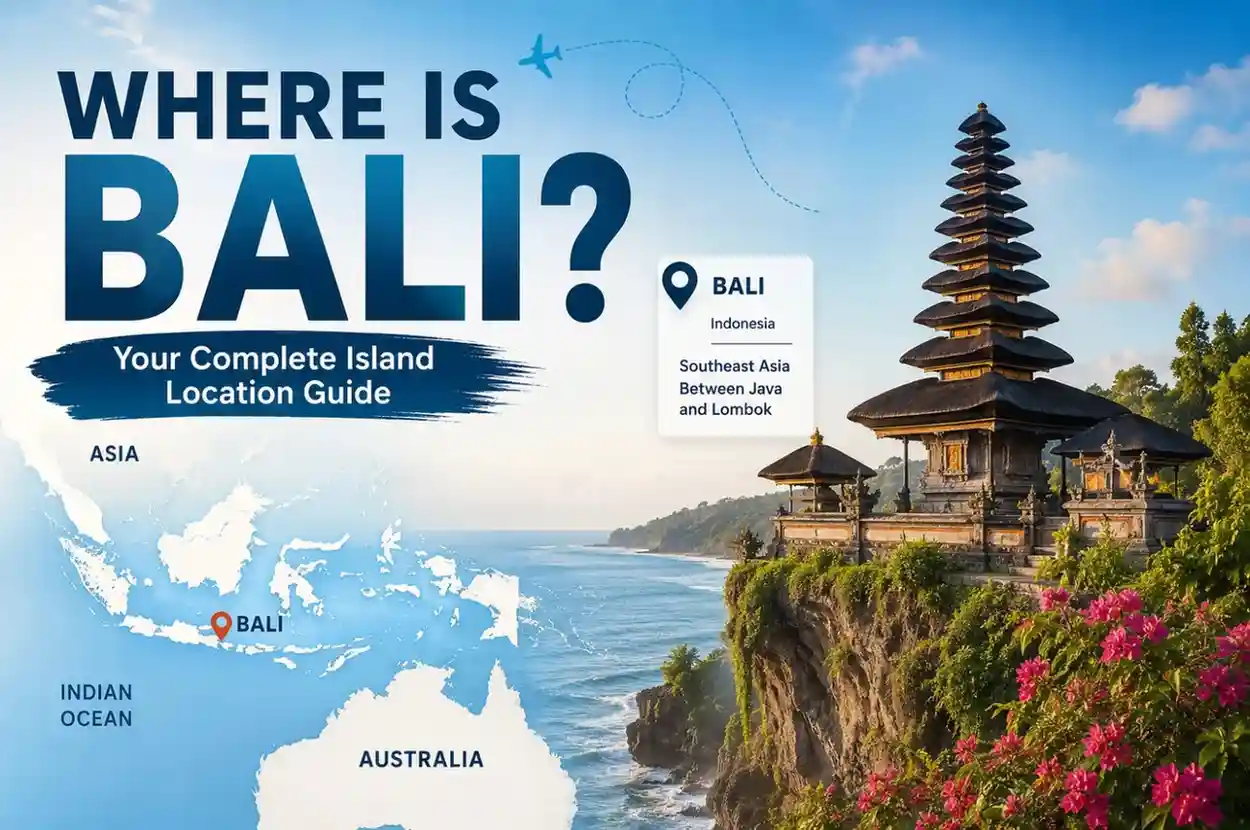
Are you dreaming of pristine beaches and lush rice terraces but wondering exactly Where Is Bali? Many travelers picture this tropical paradise without knowing its precise location. Understanding Bali’s geographic position helps you plan flights, explore nearby islands, and maximize your adventure. This guide reveals everything about Bali’s location and why it matters for your journey.
Understanding Bali’s Geographic Location
Bali sits in Southeast Asia as part of the Indonesian archipelago. This small island measures approximately 153 kilometers wide and 112 kilometers north to south. The island occupies a strategic position between Java to the west and Lombok to the east.
Key Geographic Facts:
- Continent: Asia (Southeast Asian region)
- Country: Indonesia
- Coordinates: 8.3405° S, 115.0920° E
- Total Area: 5,780 square kilometers
- Population: Approximately 4.3 million people
The island lies roughly 8 degrees south of the equator, giving it a tropical climate year-round. This positioning creates the warm weather and seasonal patterns that attract millions of visitors annually.
Which Country Does Bali Belong To?
Bali represents one of 34 provinces within the Republic of Indonesia. Indonesia spans over 17,000 islands, making it the world’s largest archipelago nation. The country stretches from Southeast Asia into Oceania, bridging the Indian and Pacific Oceans.
Indonesian Context:
- Capital of Bali Province: Denpasar
- National Capital: Jakarta (located on Java island)
- Official Language: Indonesian (Bahasa Indonesia)
- Local Language: Balinese
While Indonesia is predominantly Muslim, Bali maintains a unique Hindu-majority culture. This religious distinction creates the island’s distinctive temples, ceremonies, and artistic traditions that differ from other Indonesian regions.
Bali’s Position Within Southeast Asia
Southeast Asia comprises 11 countries, and Indonesia anchors the southern maritime region. Bali’s location places it within easy reach of major Asian travel hubs. The island serves as a gateway between Australia and mainland Asia.
Nearby Countries and Distances:
- Singapore: 1,500 kilometers northwest
- Malaysia: 1,600 kilometers northwest
- Thailand: 2,400 kilometers northwest
- Australia (Darwin): 2,700 kilometers south
- Philippines: 2,300 kilometers northeast
This central position makes Bali accessible from multiple international departure points. According to Lonely Planet, the island receives direct flights from across Asia, Australia, and increasingly from Europe and the Middle East.
How Far Is Bali from Major Indonesian Islands?
Understanding Bali’s relationship with neighboring Indonesian islands helps plan multi-destination trips. The island chain creates natural stepping stones for island-hopping adventures.
Distance to Major Indonesian Islands:
| Island | Direction | Distance | Travel Time |
| Java | West | 2.4 km (Bali Strait) | 45 min (ferry) |
| Lombok | East | 35 km | 2-4 hours (ferry) |
| Sumatra | Northwest | 1,200 km | 2.5 hours (flight) |
| Sulawesi | Northeast | 800 km | 1.5 hours (flight) |
| Komodo | East | 450 km | 3 days (boat) |
The narrow Bali Strait separates Bali from Java, creating a significant biogeographical boundary. Scientists recognize this strait as the Wallace Line, where Asian and Australian ecosystems meet. Ferry services operate continuously between Bali’s Gilimanuk port and Java’s Ketapang port.
Getting to Bali: Transportation Options
Ngurah Rai International Airport serves as Bali’s primary gateway. Located near Denpasar in southern Bali, this airport handles over 16 million passengers annually. The airport code DPS appears on all flight bookings to the island.
International Flight Routes:
- From Australia: Direct flights from Sydney, Melbourne, Perth, Brisbane (3-6 hours)
- From Singapore: Direct flights (2.5 hours)
- From Hong Kong: Direct flights (4.5 hours)
- From Dubai: Direct flights (10 hours)
- From Europe: Connections through Singapore, Hong Kong, or Dubai
Alternative Entry Points:
- Ferry from Java (Gilimanuk port)
- Cruise ship arrivals at Benoa Harbor
- Private yacht marinas in Serangan
The Indonesian Ministry of Tourism reports that air travel accounts for 95% of international arrivals. Most visitors fly directly to Ngurah Rai rather than entering through other Indonesian gateways.
Climate and Best Times to Visit Based on Location
Bali’s equatorial position creates two distinct seasons rather than four. The island experiences minimal temperature variation throughout the year, with coastal temperatures ranging from 26-30°C (79-86°F).
Seasonal Patterns:
Dry Season (April – September):
- Lower humidity levels
- Minimal rainfall
- Peak tourist season (July-August)
- Ideal beach weather
- Higher accommodation prices
Wet Season (October – March):
- Afternoon rain showers
- Lush green landscapes
- Fewer crowds
- Better hotel rates
- Still suitable for travel
The island’s mountainous interior creates microclimates. Ubud and highland areas receive more rainfall than coastal regions. Southern beaches like Seminyak experience different weather patterns than northern areas like Lovina.
Major Regions and Areas Within Bali
Bali divides into eight regencies and one municipality, each offering distinct experiences. Understanding regional differences helps travelers choose ideal bases for their interests.
Southern Bali:
- Denpasar: Provincial capital and commercial center
- Seminyak: Upscale beaches and dining
- Canggu: Surf culture and digital nomad hub
- Uluwatu: Clifftop temples and surf breaks
- Nusa Dua: Luxury resorts and protected beaches
Central Bali:
- Ubud: Cultural heart, rice terraces, art galleries
- Gianyar: Traditional villages and temples
- Bangli: Mountain temples and lake views
East Bali:
- Amed: Diving and snorkeling spots
- Candidasa: Quiet coastal town
- Mount Agung: Sacred volcano (3,031 meters)
North Bali:
- Lovina: Black sand beaches and dolphin watching
- Singaraja: Former colonial capital
West Bali:
- Tanah Lot: Iconic sea temple
- West Bali National Park: Wildlife sanctuary
Each region maintains unique characteristics shaped by geography, culture, and development patterns.
Time Zone and What It Means for Travelers
Bali operates on Central Indonesian Time (WITA), which is UTC+8. This timezone places the island eight hours ahead of Greenwich Mean Time. Understanding time differences helps coordinate flights and communications.
Time Differences from Major Cities:
| City | Time Difference | When It’s Noon in Bali |
| New York | -12/-13 hours | Midnight/11 PM previous day |
| London | -7/-8 hours | 4-5 AM |
| Singapore | Same timezone | Noon |
| Sydney | +2/+3 hours | 2-3 PM |
| Los Angeles | -15/-16 hours | 8-9 PM previous day |
Indonesia spans three time zones across its vast archipelago. Bali shares its timezone with Makassar (Sulawesi) but sits one hour ahead of Jakarta. This difference occasionally confuses travelers connecting through Indonesia’s capital.
Bali doesn’t observe daylight saving time. The consistent sunrise (around 6 AM) and sunset (around 6 PM) throughout the year reflect the island’s proximity to the equator.
Cultural Significance of Bali’s Location
Geographic isolation shaped Bali’s unique Hindu culture. While Islam spread across most Indonesian islands, Bali maintained Hindu-Buddhist traditions dating back to the Majapahit Empire. The Bali Strait created enough separation to preserve distinct cultural practices.
Cultural Influences:
- Indian: Hindu religious traditions and temple architecture
- Javanese: Historical political connections and artistic styles
- Chinese: Trade relationships and community contributions
- Dutch: Colonial period architecture and administrative systems
The island’s moderate size created tight-knit communities. Every village maintains temples, performing arts groups, and traditional governance structures. According to UNESCO, Bali’s cultural landscape represents an outstanding example of harmonious interaction between spiritual and physical worlds.
Sacred Geography:
- Mount Agung: Spiritual center and home of gods
- Sea temples: Guardians against ocean spirits
- Subak system: UNESCO-recognized irrigation cooperatives
- Directional orientation: Buildings face toward mountains (sacred) rather than sea
This geographic spirituality influences daily life. Balinese people reference directions as kelod (toward the sea) and kaja (toward the mountains) rather than compass points.
What Makes Bali’s Location Special for Tourism?
Strategic positioning creates year-round tourism appeal. The island combines tropical beauty with accessibility from major population centers. Several factors make Bali’s location ideal for international visitors.
Tourism Advantages:
- Tropical climate without extreme weather events
- Convenient timezone for Asian business travelers
- Proximity to Australian market (short-haul destination)
- English widely spoken in tourist areas
- Well-developed tourism infrastructure
- Multiple daily international flights
Natural Features:
- Volcanic mountains creating dramatic landscapes
- Coral reefs supporting marine biodiversity
- Black and white sand beaches
- Waterfalls in central highlands
- Rice terrace ecosystems
The World Tourism Organization recognizes Bali as one of Asia’s premier destinations. The island welcomed 6.2 million international visitors in 2019, demonstrating sustained global appeal.
Neighboring Islands Worth Exploring from Bali
Bali’s position makes it an excellent base for exploring nearby islands. Fast boat services and short flights connect visitors to distinct ecosystems and cultures.
Gili Islands (Lombok):
- Location: 90 minutes by fast boat
- Features: Three small islands (Trawangan, Meno, Air)
- Activities: Snorkeling, diving, cycling
- Atmosphere: No motorized vehicles, laid-back vibe
Nusa Islands:
- Nusa Penida: Dramatic cliffs and manta ray diving (45 minutes)
- Nusa Lembongan: Surf breaks and seaweed farming (30 minutes)
- Nusa Ceningan: Smallest island with blue lagoon (35 minutes)
Lombok:
- Location: East of Bali
- Features: Mount Rinjani volcano, pristine beaches
- Culture: Predominantly Muslim Sasak people
- Travel Time: 2.5 hours by ferry or 30 minutes by flight
Komodo National Park:
- Location: East beyond Lombok
- Features: Komodo dragons, world-class diving
- Travel Time: 1.5 hours by flight to Labuan Bajo
These neighboring destinations create opportunities for varied experiences within short distances. Many visitors combine Bali with island-hopping adventures across the Indonesian archipelago.
Practical Information for First-Time Visitors
Visa Requirements:
- Citizens from 169 countries receive visa-free entry (30 days)
- Visa on arrival available for longer stays (60 days)
- Requirements vary by nationality (check official sources)
Currency:
- Indonesian Rupiah (IDR)
- Currency exchange widely available
- ATMs accessible in tourist areas
- Credit cards accepted at hotels and restaurants
Health Considerations:
- No mandatory vaccinations required
- Recommended: Hepatitis A, Typhoid, Tetanus
- Travel insurance strongly advised
- Quality medical facilities available in southern Bali
Transportation on Island:
- Scooter rentals (international license required)
- Private drivers and tour services
- Ride-hailing apps (Grab, Gojek)
- Limited public transportation
Internet and Communication:
- 4G coverage across most areas
- SIM cards available at airport and shops
- Wi-Fi standard in hotels and cafes
- International roaming costs vary by provider
Frequently Asked Questions
Q1: Where is Bali located on the world map?
Bali sits in Southeast Asia as part of Indonesia, positioned between Java island to the west and Lombok island to the east. The island lies approximately 8 degrees south of the equator in the Indian Ocean, with coordinates 8.3405° S, 115.0920° E.
Q2: Is Bali part of Thailand or its own country?
Bali belongs to Indonesia, not Thailand. These are two separate Southeast Asian countries. Indonesia is an archipelago nation comprising over 17,000 islands, while Thailand sits on mainland Southeast Asia approximately 2,400 kilometers northwest of Bali.
Q3: How long does it take to fly to Bali from major cities?
Flight times vary by departure city: Australia (3-6 hours), Singapore (2.5 hours), Hong Kong (4.5 hours), Dubai (10 hours), and London (16-18 hours with connections). Most European and American travelers connect through Asian hubs like Singapore, Hong Kong, or Dubai.
Q4: What language do people speak in Bali?
Indonesian (Bahasa Indonesia) serves as the official language throughout Bali. Locals also speak Balinese among themselves. English is widely understood in tourist areas, hotels, restaurants, and attractions. Many signs and menus appear in both Indonesian and English.
Q5: Is Bali safe for tourists given its location in the Ring of Fire?
Bali sits within the Pacific Ring of Fire, an area with volcanic and seismic activity. Mount Agung occasionally shows activity, but authorities monitor volcanoes continuously. Millions visit safely each year. Register with your embassy, follow local warnings, and maintain travel insurance for comprehensive protection.
Q6: Can you visit Bali year-round or only during specific seasons?
You can visit Bali throughout the entire year thanks to its tropical climate. The dry season (April-September) offers optimal beach weather, while the wet season (October-March) brings afternoon showers but maintains warm temperatures. Both seasons provide enjoyable experiences with different advantages.
Start Planning Your Bali Adventure Today
Bali’s unique position in the Indonesian archipelago creates an accessible paradise combining natural beauty, rich culture, and modern amenities. The island’s location between the Indian and Pacific Oceans provides year-round tropical weather while maintaining connections to major global travel hubs. Whether you seek spiritual experiences in ancient temples, world-class surfing on pristine beaches, or cultural immersion in traditional villages, understanding where Bali is helps you plan the perfect journey.
The island’s compact size allows exploration of diverse regions within short distances. From volcanic peaks to coral reefs, rice terraces to bustling markets, Bali packs extraordinary variety into 5,780 square kilometers. Your adventure begins with knowing exactly where this magical island sits on the world map.
Ready to experience Bali firsthand? Research flight options to Ngurah Rai International Airport, check current visa requirements, and start mapping your ideal itinerary. Share your Bali travel plans in the comments below or connect with fellow travelers planning their Indonesian adventures.
Author Bio: This comprehensive guide draws from extensive travel research, geographic data from official Indonesian tourism sources, and verified travel information. Content reviewed for accuracy and updated based on current travel conditions and requirements.
Sources:
- Lonely Planet Indonesia Travel Guide
- Indonesian Ministry of Tourism Official Portal
- UNESCO World Heritage Centre
- World Tourism Organization Regional Reports
- Indonesian Immigration Office Guidelines