Cleveland Cavaliers vs Pacers Match Player Stats
Cleveland Cavaliers vs Pacers Match Player Stats Breakdown
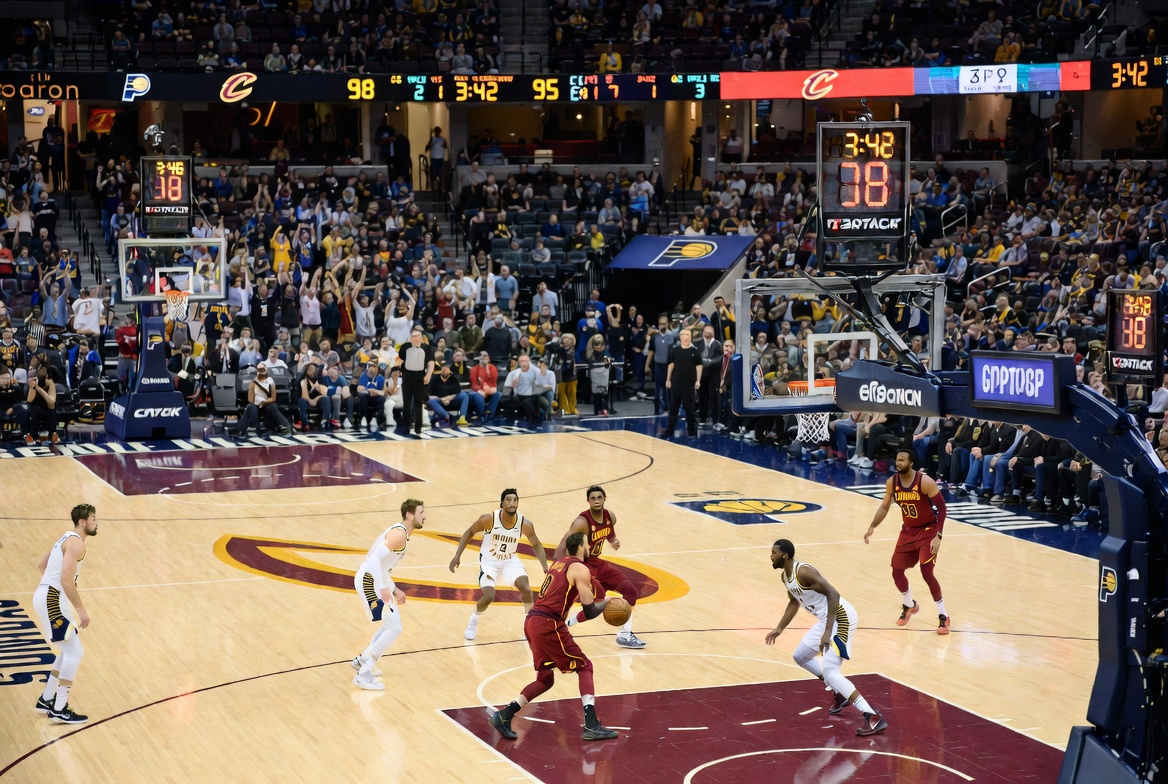
When the Cleveland Cavaliers and the Indiana Pacers meet on the hardwood, basketball fans are almost always guaranteed a clash of contrasting styles. The latest chapter in this Central Division rivalry delivered exactly that, with the Cavaliers erasing a late deficit to secure a hard-fought 120-116 victory.
For fantasy managers, analysts, and fans looking to dissect the tape, the box score tells a fascinating story of paint dominance, perimeter spacing, and clutch shot-making. Let’s dive deep into the player statistics, shooting metrics, and tactical shifts that defined this 120-116 thriller.
The Big Picture: Cavaliers Secure a 120-116 Thriller Over Indiana
Basketball is a game of runs, and this matchup was a textbook example. Entering the fourth quarter facing a nine-point deficit, the Cavaliers relied on their half-court execution and elite interior presence to claw their way back. Indiana, attempting to snap a brutal franchise-record losing streak, played with desperate, high-paced energy for 36 minutes. They moved the ball flawlessly and hit their perimeter shots, but ultimately lacked the size to hold off Cleveland’s relentless late-game surge.
The final buzzer sealed a game that was won entirely on the margins: second-chance opportunities, late-game isolation scoring, and defensive rebounding.
Cleveland Cavaliers Player Stats: The Backcourt and Frontcourt Synergy
Cleveland’s offensive engine operated at peak efficiency, shooting an impressive 55.7% from the floor. The balance between their perimeter creation and frontcourt finishing was the catalyst for the comeback.
| Player | MIN | PTS | REB | AST | FG | 3PT |
| :— | :— | :— | :— | :— | :— |
| Darius Garland | 32 | 29 | 2 | 6 | 14/23 | 1/4 |
| Evan Mobley | 35 | 20 | 6 | 5 | 8/16 | 0/3 |
| Jarrett Allen | 33 | 19 | 12 | 4 | 8/13 | 0/1 |
| Sam Merrill | 31 | 19 | 4 | 2 | 6/12 | 6/10 |
| Dean Wade | 8 | 3 | 1 | 0 | 1/2 | 1/2 |
Darius Garland’s Fourth-Quarter Takeover
Darius Garland was the undisputed architect of Cleveland’s late-game rally. Finishing with a game-high 29 points and 6 assists, Garland was heavily relied upon to break down Indiana’s point-of-attack defense. What makes his stat line jump off the page is his efficiency inside the arc. Shooting 14-of-23 from the field while only making a single three-pointer proves that Garland was dicing up the Pacers’ drop coverage.
Fourteen of his 29 points came in the fourth quarter alone. He utilized his floater game and sharp change-of-pace dribbles to navigate into the teeth of the defense, hitting tightly contested midrange jumpers when the shot clock dwindled.
The Twin Towers: Mobley and Allen Control the Paint
Cleveland’s frontcourt duo of Evan Mobley and Jarrett Allen absolutely overwhelmed Indiana’s interior defense. Mobley tallied 20 points, 6 rebounds, and 5 assists, showcasing his evolving playmaking ability from the high post. He connected on 8 of his 16 attempts, primarily operating through sharp cuts and decisive drives.
Jarrett Allen, meanwhile, was a destructive force on the glass. He logged a massive double-double with 19 points and 12 rebounds (including 3 offensive boards). Allen’s 8-for-13 shooting performance was built on a diet of lob catches, putbacks, and strong post seals. Together, Mobley and Allen forced the Pacers to collapse their defense, which opened up the floor for the guards.
Sam Merrill’s Critical Spacing from the Bench
With starting forward Dean Wade exiting the game in the first half due to a bruised left knee, Cleveland desperately needed someone to step up and stretch the floor. Enter Sam Merrill. Playing 31 critical minutes, Merrill poured in 19 points, doing almost all of his damage from beyond the arc.
Merrill shot a blistering 6-of-10 from three-point territory. His off-ball movement—curling around screens and relocating in transition—gave Garland and Mobley the necessary breathing room to operate in the paint. Without Merrill’s elite floor spacing, Cleveland’s comeback bid would have likely stalled.
Indiana Pacers Player Stats: A Resilient Effort in a Tough Loss
The Pacers played an incredibly efficient offensive game, shooting 46.2% from the field and a red-hot 45.7% from three-point range. Despite their current struggles in the standings, the box score reflects a team that executes its offensive sets with precision.
| Player | PTS | REB | AST | FG | 3PT |
| Pascal Siakam | 22 | – | – | – | – |
| Jay Huff | 20 | – | – | 7/10 | 4/7 |
| Andrew Nembhard | 15 | – | 11 | – | – |
(Note: Peripheral stats limited for select Pacers based on official game distribution, highlighting primary contributors).
Pascal Siakam’s Steady Hand
Pascal Siakam continues to be the reliable veteran anchor for the Pacers. He led the team with 22 points, utilizing his unique blend of spin moves, transition finishing, and mid-range touch. Siakam successfully exploited mismatches when Cleveland switched on screens, forcing the Cavaliers to send timely double-teams in the second half to slow him down.
Andrew Nembhard’s Playmaking Masterclass
Running the offense with surgical precision, Andrew Nembhard finished with 15 points and a brilliant 11 assists. Nembhard dictated the pace of the game, consistently finding shooters in the corners and feeding the roll man out of the pick-and-roll. His ability to read Cleveland’s defensive rotations is a primary reason the Pacers managed to hit 16 three-pointers on the night.
Jay Huff’s Breakout Performance
The biggest surprise of the night came from the Indiana bench. Jay Huff tied his season-high with a spectacular 20-point performance. Huff was highly efficient, shooting 7-of-10 from the field and stepping out to hit 4 of his 7 attempts from deep. His ability to act as a stretch-five pulled Jarrett Allen away from the basket, temporarily neutralizing Cleveland’s rim protection and allowing Indiana’s guards to attack the cup during the middle quarters.
Team Stats Comparison: Where the Game Was Won
If you want to know why a team that shot nearly 46% from deep still lost the game, you have to look at the team metrics. The margins in the NBA are razor-thin, and Cleveland dominated the gritty, physical categories.
The Battle of the Boards and Paint Dominance
The most glaring disparity in the box score is the rebounding battle. The Cavaliers outrebounded the Pacers 48 to 32. Cleveland secured 10 offensive rebounds compared to Indiana’s 7, allowing them to reset the shot clock and generate back-breaking second-chance points during crucial stretches of the fourth quarter.
Furthermore, Cleveland generated a staggering 64 points in the paint compared to Indiana’s 42. When the perimeter shots weren’t falling early for Cleveland, they simply imposed their will inside, leveraging their size advantage to get high-percentage looks right at the rim.
Turnovers, Efficiency, and Fast-Break Execution
Indiana actually won the turnover battle, committing only 11 turnovers to Cleveland’s 19. The Pacers capitalized on these mistakes, scoring 21 points off turnovers compared to the Cavaliers’ 12.
However, Cleveland’s raw shooting efficiency mitigated their sloppy ball control. Hitting nearly 56% of your shots over a 48-minute game is incredibly difficult to overcome. Cleveland also managed to hit 12 of their 18 free throws, doing just enough at the charity stripe to keep the game out of reach in the dying seconds.
Tactical Takeaways and Adjustments
Watching the flow of this game revealed a few distinct tactical narratives:
- Cleveland’s Perimeter Patience: Instead of forcing contested three-pointers against Indiana’s energetic closeouts, Cleveland relentlessly probed the interior. They realized early on that Indiana lacked the personnel to stop Mobley and Allen without sending help, which eventually opened up clean looks for Merrill.
- Indiana’s Five-Out Offense: The Pacers deliberately used Jay Huff to drag the Cavaliers’ bigs to the perimeter. This five-out offensive alignment gave Nembhard the driving lanes he needed to rack up 11 assists.
- The Garland Mismatch: In the fourth quarter, Cleveland actively hunted mismatches for Darius Garland through high ball screens. Once Garland got a step on the retreating defender, his elite floater game made the defense pay every single time.
What This Matchup Means Moving Forward
For the Cleveland Cavaliers, this 120-116 win is a testament to their late-game execution and mental toughness. Erasing a nine-point fourth-quarter deficit on the road requires championship-level composure. If Garland can continue scoring with this level of efficiency inside the arc, and the frontcourt maintains its rebounding dominance, Cleveland remains a formidable threat in the Eastern Conference hierarchy.
For the Indiana Pacers, the box score offers a mix of frustration and optimism. Dropping a franchise-record 13th straight game is a bitter pill to swallow, especially when the offense hummed at such a high level. However, the emergence of Jay Huff as a viable stretch option and the elite playmaking of Andrew Nembhard give the coaching staff clear building blocks. If they can tighten up their defensive rebounding and shore up their interior defense, the losing streak will inevitably come to an end.
Who was the leading scorer in the Cavaliers vs. Pacers game?
Darius Garland led all scorers with 29 points, shooting an incredibly efficient 14-of-23 from the field to lead the Cavaliers to victory.
How many rebounds did Jarrett Allen have against the Pacers?
Jarrett Allen dominated the glass, pulling down 12 rebounds to go along with his 19 points.
What were Sam Merrill’s three-point stats in this matchup?
Sam Merrill was crucial off the bench for Cleveland, hitting 6 of his 10 attempts from three-point range, finishing with 19 points.
Who led the Indiana Pacers in assists against Cleveland?
Andrew Nembhard was the primary playmaker for the Pacers, finishing the game with an impressive 11 assists.
What was the final team rebounding difference between the Cavs and Pacers?
The Cavaliers significantly outrebounded the Pacers, winning the battle on the boards 48 to 32, which played a massive role in their comeback.
About the Author