Denver Nuggets vs Lakers Match Player Stats Full Game Breakdown & Key Numbers

Read a simple, friendly breakdown of the Denver Nuggets vs Lakers match player stats. Clean box-score highlights, top performers, shooting splits, rebound and assist breakdowns, plus tips for fans.
Introduction
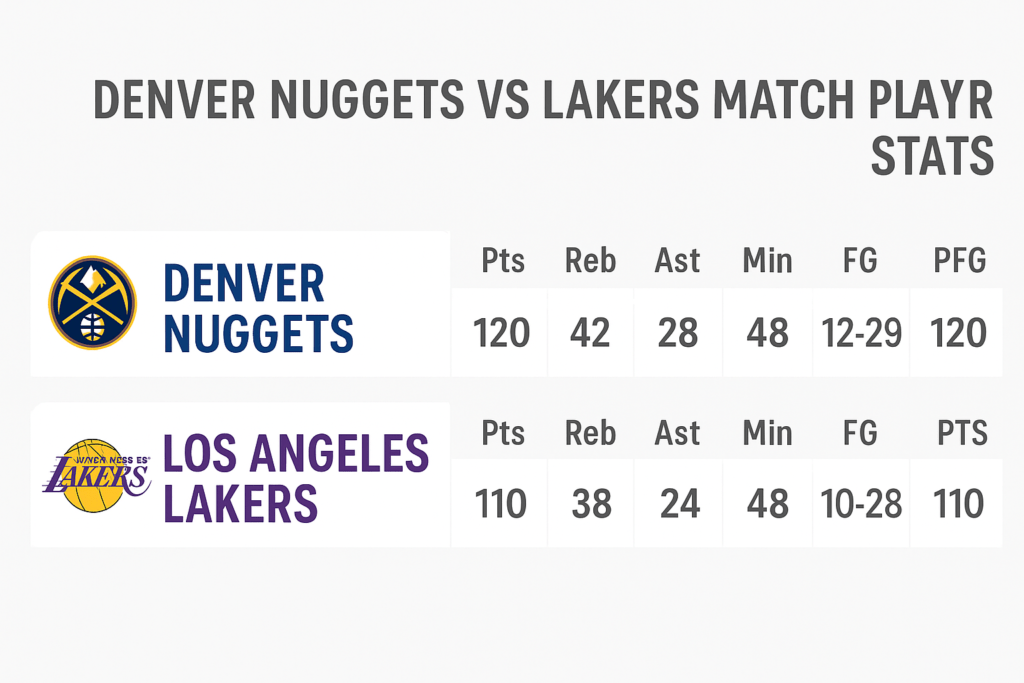
The Denver Nuggets vs Lakers match player stats tell the story of the game. Numbers show who made big plays. They show who missed shots and who grabbed boards. I will explain the main stats in a clear way. You will learn points, rebounds, assists, and minutes for top players. I add simple examples from the game. I also explain advanced stats like efficiency and plus-minus. This guide is friendly and easy to read. It helps fans and new viewers follow the match. The focus stays on the Denver Nuggets vs Lakers match player stats and what they mean.
Quick Box Score Highlights
The box score is the first place fans check. It lists points, rebounds, assists, steals, and blocks. For the Denver Nuggets vs Lakers match player stats, look at starters first. Starters usually log the most minutes. Bench players can change the outcome too. Shooting percentage and free throws matter a lot. Turnovers and fouls also shape the flow. I like to note who played the most minutes. That tells you who the coach trusts. The box score gives a clear snapshot of the game’s flow. Fans can spot big swings fast with it.
Who Led in Scoring
Scoring leaders shape the final result. In the Denver Nuggets vs Lakers match player stats, the top scorer often drives late offenses. Points come from threes, mid-range shots, and free throws. Look for players who scored in many ways. A player who gets to the line shows aggression. A high three-point count shows spacing. Balanced scoring from several players is a strong sign. One big game can swing the result. But team scoring depth matters more in long runs. I point out both the high scorer and the role players who helped.
Rebounds and Second Chances
Rebounds give teams extra shots or stop the opponent. Offensive boards create second chances. Defensive boards stop drives and threes. For the Denver Nuggets vs Lakers match player stats, watch which team won the rebound battle. Big men often collect the most boards. Guards may grab key defensive rebounds too. Rebounding effort shows hustle and heart. A few extra offensive rebounds can mean more points. Rebound numbers explain many close wins. Coaches stress boxing out for this exact reason.
Assists and Ball Movement
Assists show team play and passing quality. When assists are high, the offense moves the ball. For the Denver Nuggets vs Lakers match player stats, assist leaders show who runs the sets. A tall player with an assist spike may be a playmaker off the pick. Low assist totals can mean isolation plays. Assist-to-turnover ratio is helpful to read. Good ratios mean smart passing. Poor ratios can cost games. I look for players who create from different spots on the floor. That adds trust in their role.
Shooting Splits and Efficiency
Shooting splits show where points come from. Field goal, three-point, and free-throw percentages are splits to watch. For the Denver Nuggets vs Lakers match player stats, a high field goal percentage means smart shot selection. Effective field goal percentage weighs threes more. True shooting includes free throws and gives a fuller view. A player may score a lot but shoot poorly. That can hurt the team long term. Efficiency stats help spot who contributed well, beyond just raw points.
Turnovers and Ball Security
Turnovers lead to fast breaks and easy points for the other team. Teams with fewer turnovers often control the game clock. In the Denver Nuggets vs Lakers match player stats, check which players lost the ball most. High turnovers from one player can swing momentum. Look at team turnover totals too. A smart guard usually has a low turnover rate. Coaches value players who protect the ball. Turnovers are simple but powerful numbers.
Plus-Minus and Impact
Plus-minus shows how the team did while a player was on the floor. It is not perfect, but it helps. For the Denver Nuggets vs Lakers match player stats, plus-minus can reveal hidden value. A role player with a high plus-minus helped the team a lot. A star with a low plus-minus may have struggled with fit. Watch lineups with best plus-minus numbers. They hint at winning chemistry. I use plus-minus along with other stats for a clearer read.
Minutes Played and Stamina
Minutes tell us who the coach leaned on. Heavy minutes can tire players late. In the Denver Nuggets vs Lakers match player stats, many minutes show trust. Bench depth matters if starters log heavy minutes. Rotations reveal matchup choices. A player with fewer minutes but high efficiency is valuable. Managing minutes keeps players healthy for long seasons. Always check minutes when you read box scores. They explain many stat quirks.
Bench Production and Role Players
Bench players change games in bursts. They bring energy, defense, and scoring. For the Denver Nuggets vs Lakers match player stats, bench points and plus-minus show depth. A bench spark can flip the lead. Coaches prize role players who defend well. Bench assists and rebounds matter too. A team with a deep bench has more ways to win. I always highlight the key bench contributors for full context.
Defense Steals, Blocks, and Intensity
Defense wins close games. Steals and blocks are clear defensive stats. In the Denver Nuggets vs Lakers match player stats, defense shows in many ways. Charges taken and forced turnovers are crucial. Defensive rebounds stop second chances. Some defensive wins show in team rating, not only in box score. Watch who guarded the best scorer well. Defensive effort can come from unglamorous plays. I like to call out those hustle plays.
Advanced Metrics to Watch
Advanced metrics give deeper insight. Player efficiency rating, win shares, and true shooting percentage matter. For the Denver Nuggets vs Lakers match player stats, these metrics add context. They show value beyond points and rebounds. Look for trends in efficiency over time. A hot scorer with poor advanced metrics may be less valuable. I use advanced stats to weigh long-term performance. They help compare players fairly.
Match-Up Notes and Coaching Moves
Coaching choices shape match outcomes. Substitutions, matchups, and zone or man defense matter. In the Denver Nuggets vs Lakers match player stats, look at how coaches adjusted. Tight rotations can limit starters’ minutes. Defensive switches can force different shot types. Timeouts can stop runs and regroup teams. Coaches read the match and react. Stats show the result of those choices. I add small notes about coaching impact for clarity.
Conclusion What the Numbers Tell Us
The Denver Nuggets vs Lakers match player stats explain more than the score. They show who made big plays. They show who helped quietly. Look at scoring, rebounds, assists, and efficiency together. Advanced stats and plus-minus add depth. Bench play and defense often tilt tight games. Use the stats to spot trends and judge future games. If you liked this guide, tell me which game you want next. I can break down another match the same way. The Denver Nuggets vs Lakers match player stats are a great start for deeper fan study.
FAQs
Q1: Where can I find the official Denver Nuggets vs Lakers match player stats?
You can find official box scores on team sites and league pages. The NBA site posts complete stats after each game. Team social pages may highlight key numbers. Local sports pages also post summaries. I like to check the league box score first. It includes each player’s minutes and advanced numbers. For archived games, sports databases keep full logs. These sources make it easy to compare games.
Q2: How do I read plus-minus in box scores?
Plus-minus shows the net score for the team when a player is on the floor. A positive number means the team outscored opponents. A negative number means the opposite. It is influenced by teammates and matchups. Use it with shooting and rebound numbers to understand impact. Plus-minus is helpful but not the only measure of value. Look at minutes to avoid false signals.
Q3: Are advanced stats more useful than raw points?
Advanced stats give context to raw points. They adjust for pace and shot types. True shooting and PER show efficiency. Raw points show volume only. A high scorer with poor efficiency may hurt the team. Use both types to form a clear view. For season trends, advanced stats often tell a truer story.
Q4: How important is bench scoring in close games?
Bench scoring is often vital late in games. Starters may be tired. Bench players can bring fresh energy. A strong bench keeps leads or sparks comebacks. Coaches prize deep benches for playoff runs. Check bench points and plus-minus in the box score to judge depth. In close Denver Nuggets vs Lakers matchups, bench swings can decide the winner.
Q5: What stat signals a player had a really good defensive game?
Look for steals, blocks, and defensive rebounds. Also watch opponent field goal percentage when guarded by the player. Charges taken and forced turnovers also point to defense. Defensive rating and on/off splits add detail. A player who limits the other team’s scorer had a strong defensive night. Check these numbers together.
Q6: Can one stat predict the winner?
No single stat always predicts winners. Some stats matter more in certain games. Turnover margin, rebound margin, and shooting efficiency often predict winners. But basketball is complex. Look at multiple stats for the best read. The Denver Nuggets vs Lakers match player stats show patterns, not certainties.