Business Vertical Classification Categories: The Ultimate Guide 2026
The Art of Market Dominance
A Comprehensive Guide to Business Vertical Classification
Every successful entrepreneur knows that finding your place in the market is the first step toward greatness. When you understand business vertical classification categories, you gain a superpower that helps you see exactly where your company fits. It is not just about a label or a name on a document. Instead, it is about knowing your audience so well that you can predict their every move. By focusing on a specific vertical, you stop trying to please everyone and start becoming the hero for a specific group of people who truly need your help. This clarity allows you to spend your money and time much more wisely than your competitors.
Imagine walking into a massive library without any signs or labels on the shelves. You would spend hours wandering around feeling frustrated and lost. The world of commerce works the same way without a clear structure. Using business vertical classification categories is like putting bright, neon signs over every section of that library. It tells investors, customers, and partners exactly what you do and why you are the best at it. When you nail down your niche, you build a foundation that is strong enough to support a global empire. Let’s dive deep into how these categories shape the future of modern industry.
Understanding the Power of Market Verticals
A business vertical is a specific industry or niche where businesses offer goods and services to a targeted group of customers. Unlike a horizontal market that sells to everyone, a vertical market focuses on one thing and does it better than anyone else. When we talk about business vertical classification categories, we are looking at the specialized lanes where companies compete. For example, a company making software specifically for dentists is in a vertical market. They aren’t trying to sell to car mechanics or grocery stores. They know the exact pains of a dentist and solve them perfectly.
Choosing the right path within these business vertical classification categories can determine if your business thrives or just survives. High-growth companies often dominate a single vertical before they even think about moving into others. This focus allows for deeper expertise and much stronger brand loyalty. Customers love experts, and they are usually willing to pay more for someone who understands their unique world. By leaning into a vertical, you create a protective barrier around your business. This makes it very hard for general companies to come in and steal your loyal customer base.
The Massive Benefits of Industry Categorization
Why does categorization matter so much in the modern economy? It all comes down to data and efficiency. When a company uses business vertical classification categories correctly, they can analyze their performance against direct peers. You wouldn’t compare the success of a local bakery to the success of a rocket ship company. They operate in different worlds with different rules. Categorization ensures that you are measuring your wins against the right benchmarks. This leads to smarter decisions and much faster growth over the long term for your dedicated team.
Furthermore, business vertical classification categories help you find the right partners. If you are in the healthcare vertical, you want to work with suppliers who understand medical laws and privacy. If you are in the construction vertical, you need people who understand safety and heavy materials. This alignment saves you from making massive mistakes that could cost millions of dollars. Being part of a recognized category also makes it easier for customers to find you. When they search for a specific solution, your specialized category helps you show up as the top authority in their eyes.
Deep Dive into the Master Category Table
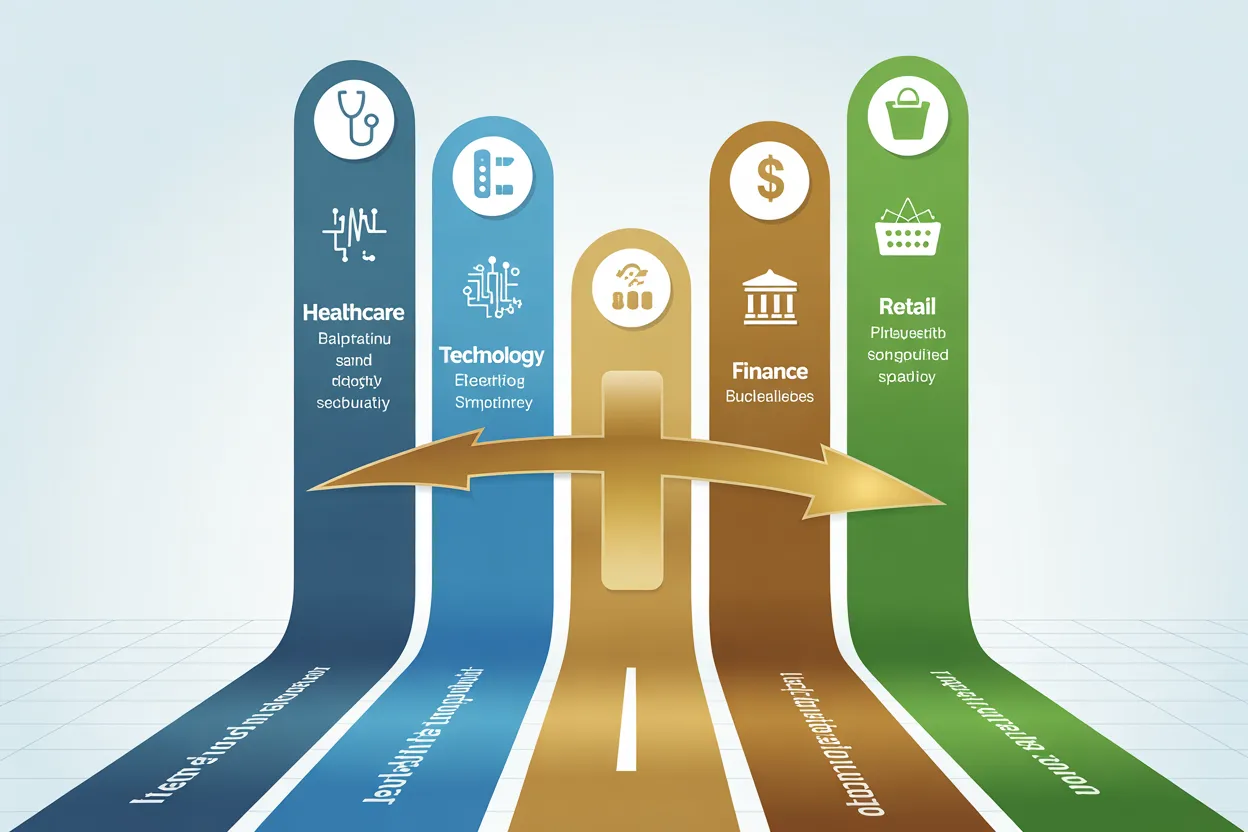
To help you visualize how the economy is broken down, I have created a detailed guide. This table shows how different sectors represent various business vertical classification categories. Understanding these will help you position your brand for maximum impact in the United States market.
| Vertical Category | Primary Focus | Key Customer Base | Example Industry |
|---|---|---|---|
| FinTech | Financial Technology | Banks, Investors, Consumers | Online Payment Apps |
| EdTech | Educational Tools | Schools, Students, Teachers | Learning Platforms |
| HealthTech | Medical Innovation | Hospitals, Doctors, Patients | Telehealth Services |
| PropTech | Real Estate Solutions | Realtors, Renters, Buyers | Virtual Home Tours |
| AgriTech | Farming & Agriculture | Farmers, Food Producers | Smart Irrigation |
| Retail | Consumer Goods | Individual Shoppers | Clothing Boutiques |
| Logistics | Shipping & Supply | Manufacturers, Trucking | Package Tracking |
How to Identify Your Specific Business Vertical
Finding your spot among the many business vertical classification categories requires a bit of soul-searching and a lot of research. You must look at your product and ask, “Who cannot live without this?” If your answer is “everyone,” you need to think harder. The riches are in the niches. Narrowing down your focus helps you speak the language of your customers. If you are selling to law firms, your marketing should sound professional and authoritative. If you are selling to surf shops, you want to be laid-back and trendy.
Once you pick one of the business vertical classification categories, stick to it until you are a leader. Many people make the mistake of jumping from one category to another because they get distracted by “shiny objects.” Real wealth is built by staying the course and becoming the “go-to” person in a specific field. Think about the most famous brands you know. Most of them started by dominating a tiny sliver of the market before they grew into the giants they are today. Your goal is to own your vertical so completely that your brand name becomes a synonym for the service you provide.
The Role of Technology in New Verticals
Technology is constantly creating brand-new business vertical classification categories that didn’t exist ten years ago. Think about the world of “GreenTech” or “Clean Energy.” These are now massive industries with billions of dollars in investment. As the world changes, new problems arise, and new verticals are born to solve them. Keeping an eye on these shifts allows you to be an early adopter. Being first in a new vertical category is often the fastest way to reach the top of the mountain. It gives you a head start that others can’t easily catch.
We also see how software is “eating” traditional business vertical classification categories. Traditional taxi companies were disrupted by a new tech-driven transportation vertical. Traditional hotels were disrupted by a new short-term rental vertical. If you can use technology to make a traditional category faster, cheaper, or better, you have a winning formula. The key is to stay curious and always look for ways to innovate within your chosen space. Use the tools available today to redefine what is possible in your specific industry niche.
Marketing Strategies for Vertical Growth
Marketing inside specific business vertical classification categories is very different from general advertising. You don’t need to reach millions of people; you just need to reach the right people. This is called “Account Based Marketing” or “Vertical Marketing.” Instead of a giant billboard on a highway, you might place a small ad in a very specific trade magazine. Or, you might attend a tiny conference where only the top decision-makers in your industry hang out. This targeted approach is much more effective and saves you a ton of money.
When you create content for your business vertical classification categories, use the jargon and “insider” talk of that industry. This shows that you are one of them. It builds trust instantly. If a customer feels like you “get” them, they will choose you over a larger, more famous company every single time. Trust is the currency of the modern world. You earn trust by proving your expertise within your narrow lane. Show off your case studies, share your success stories, and be the loud voice that leads your industry into the future.
Common Challenges in Vertical Markets
While focusing on business vertical classification categories is amazing, it does come with some hurdles. The biggest risk is that your specific niche might get too small or face a sudden downturn. For example, if you only sell software to travel agencies and a global event stops people from traveling, your business will hurt. This is why it is important to be the absolute best in your category so you can survive the tough times. You want to be the last company standing because you provide the most value to your clients.
Another challenge is “ceiling height.” Some business vertical classification categories have a limit on how big you can grow. Once you have sold to every law firm in the country, where do you go next? This is when smart leaders start looking at “adjacent verticals.” These are categories that are similar to your current one but offer new rooms for growth. Moving from legal software into accounting software is a natural step because both industries value organization and security. Always have a plan for what comes after you conquer your first mountain.
Future Trends in Business Classification
Looking ahead, the lines between different business vertical classification categories are starting to blur. This is called “convergence.” We see retail companies starting to act like tech companies, and car companies starting to act like software providers. This means you must stay flexible. Even if you are firmly planted in one category, you need to watch what is happening in others. Innovation often happens when you take an idea from one vertical and apply it to a completely different one. This “cross-pollination” is how the biggest breakthroughs happen.
In the United States, we are seeing a huge move toward “Micro-Verticals.” Instead of just “Construction Tech,” we now have “Wooden Residential Construction Tech.” These super-specific business vertical classification categories allow for even deeper specialization. For a small business, this is a golden opportunity. You can be a “big fish in a small pond.” It is much easier to be the #1 provider for a tiny niche than to be #100 in a massive, crowded market. The future belongs to those who specialize and provide deep, meaningful value to a specific group.
Building Your Authority Within a Category
To truly rank at the top of your field, you must establish yourself as a thought leader within your business vertical classification categories. This means writing helpful articles, speaking at events, and helping others without always asking for a sale first. When you give away your knowledge, people start to see you as the “professor” of your industry. This builds immense “Authority” and “Trustworthiness,” which are things that search engines and customers both love. Don’t be afraid to share your secrets; the execution is what people will pay you for.
High-quality content is the best way to prove you belong at the top of the business vertical classification categories. Write about the problems your customers face every day. Offer real solutions that they can use right now. When you become a resource instead of just a vendor, your business changes forever. People will come to you because they trust your brain, not just your product. This is how you build a “moat” around your business that no competitor can cross. You are not just selling a service; you are selling your unique expertise.
Conclusion: Your Path to Market Leadership
Mastering business vertical classification categories is the secret sauce to long-term business success. It gives you the focus you need to beat the big guys and the clarity you need to serve your customers perfectly. By picking a lane and staying in it, you build a brand that stands for something specific. This makes your marketing easier, your sales faster, and your profit margins higher. Remember, it is better to be everything to someone than to be nothing to everyone. Start looking at your business through the lens of these categories today.
As you move forward, keep refining your place within the business vertical classification categories. The market is always moving, and you must move with it. Stay hungry for knowledge and always put your customers’ needs first. If you do this, you won’t just rank high on a search page; you will rank high in the hearts and minds of your audience. The journey to the top starts with a single, focused step. Now is the time to claim your territory and show the world what you are capable of achieving.
Frequently Asked Questions
1. What exactly is a business vertical?
A business vertical is a specific group of companies that serve a particular niche or industry. Unlike horizontal businesses that sell to many different types of people, a vertical business focuses on one specific group, like doctors, lawyers, or farmers. This allows them to become experts in that one area.
2. How do business vertical classification categories help with growth?
These categories help by narrowing your focus. When you focus, you can spend your marketing budget more effectively and build products that solve very specific problems. This leads to higher customer loyalty and allows you to charge premium prices for your specialized expertise.
3. Can a company operate in more than one vertical?
Yes, but it is usually best to master one before moving to another. Large companies often have different departments for different business vertical classification categories. However, for small to medium businesses, staying focused on one vertical is usually the fastest way to become profitable and well-known.
4. How do I know which category my business belongs in?
Look at your most successful customers. What do they have in common? Are they all in the same industry? Do they all have the same job title? Once you see a pattern, that is your vertical. You should align your brand and your messaging to serve that specific group of people perfectly.
5. Why is categorization important for investors?
Investors love business vertical classification categories because it helps them understand the risk and the potential reward. They can look at how other companies in that same category are doing. It gives them a clear “roadmap” of what success looks like for your particular type of business.
6. Is it better to be in a big vertical or a small one?
It depends on your goals! A big vertical has more customers, but it also has much more competition. A small vertical, or a “micro-vertical,” has fewer customers, but you can become the dominant leader much faster. Many people find more success and less stress by starting in a smaller, specialized category.